




July 22, 2026
AI Isn't the Hard Part of Travel Analysis

Clarasight
By Carl Reyes, Head of Engineering, Clarasight
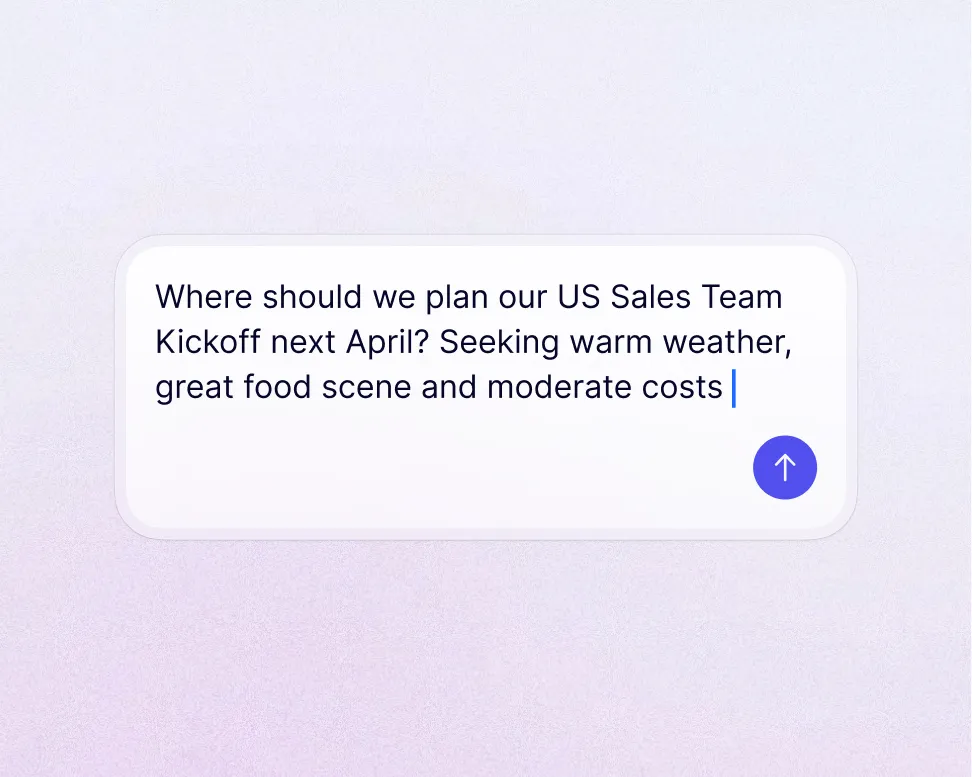
Over the last few years, I've watched the analytics industry become increasingly convinced that natural language is the future of business intelligence. The pitch is simple and compelling: instead of building reports or learning SQL, users can simply ask a question in plain English and receive an immediate answer.
On the surface, it feels like a breakthrough. If a travel leader wants to know how much they spent last month, why shouldn't they be able to type the question into a chat interface and get a result back instantly?
The reality is more complicated.
At Clarasight, we've been helping organizations understand and optimize one of the most complex categories of spend they manage: business travel. Like many companies, we've experimented extensively with large language models. We've built prototypes. We've tested text-to-SQL systems. We've explored conversational analytics experiences. And like many teams working seriously with AI, we've learned that generating answers is easy. Generating trustworthy answers is much harder.
The challenge isn't that AI struggles to write SQL. Modern language models are actually quite good at that. Given access to a database schema, they can often generate syntactically correct queries in seconds. The challenge is that business questions are rarely as precise as they appear.
Consider a question as straightforward as: "What was my total spend last month?"
To a human analyst, that question immediately triggers a series of clarifications. Which spend? Air spend? Hotel spend? Expense reimbursements? Should canceled trips be included? Should the calculation be based on booking date, travel date, invoice date, or expense submission date? Are we reporting in transaction currency or normalized currency? What about unused tickets or credits?
These aren't edge cases. They're the difference between reporting $4.8 million in spend and reporting $5.3 million in spend.
A language model doesn't inherently understand any of this context. Instead, it attempts to infer meaning from the information available to it. It sees tables, columns, descriptions, and relationships. If a warehouse contains fields called cost, total_cost, approved_amount, receipt_amount, and transaction_amount, the model can make an educated guess about which field represents spend. But a guess, no matter how sophisticated, is still a guess.
What's particularly dangerous is that the resulting SQL often looks perfectly reasonable. The query executes successfully. A chart appears. The answer feels authoritative. Yet there may be no guarantee that the system interpreted the business question the same way the organization would.
This is where I believe much of the current conversation around AI analytics misses the point.
The bottleneck has never been query generation. The bottleneck is business meaning.
Most organizations don't struggle because they lack access to data. They struggle because the same metric often means different things to different stakeholders. Finance may define spend one way. Procurement may define it another. Travel managers may have their own operational view. Executives may expect a number that excludes categories the operational teams include every day.
For years, analysts have acted as translators between business language and underlying systems. When someone asks a question, the analyst doesn't simply write SQL. They apply context. They understand company definitions. They know which source systems are authoritative and which metrics have already been agreed upon by the business.
As we've built AI capabilities at Clarasight, we've become increasingly convinced that this translation layer cannot be left to inference alone. If we want users to trust AI-generated answers, the system must operate from explicit definitions rather than probabilistic assumptions.
That's what led us to invest heavily in a semantic layer.
A semantic layer isn't particularly flashy. It doesn't generate headlines the way a chatbot does. In many ways, it's the opposite of the AI demos that dominate industry conferences. But it solves the problem that actually matters.
Instead of asking a model to determine what "spend" means every time a question is asked, the definition already exists. Instead of hoping the model selects the correct date field, the business logic has already established which date drives a particular metric. Instead of allowing every query to become a fresh interpretation exercise, the system operates from a shared vocabulary that reflects how the organization itself understands its data.
When a travel leader asks, "What was my total spend last month?", the answer is no longer based on what an AI model thinks spend might mean. It's based on a governed definition that has already been agreed upon, validated, and connected to the underlying data.
But even that isn't enough.
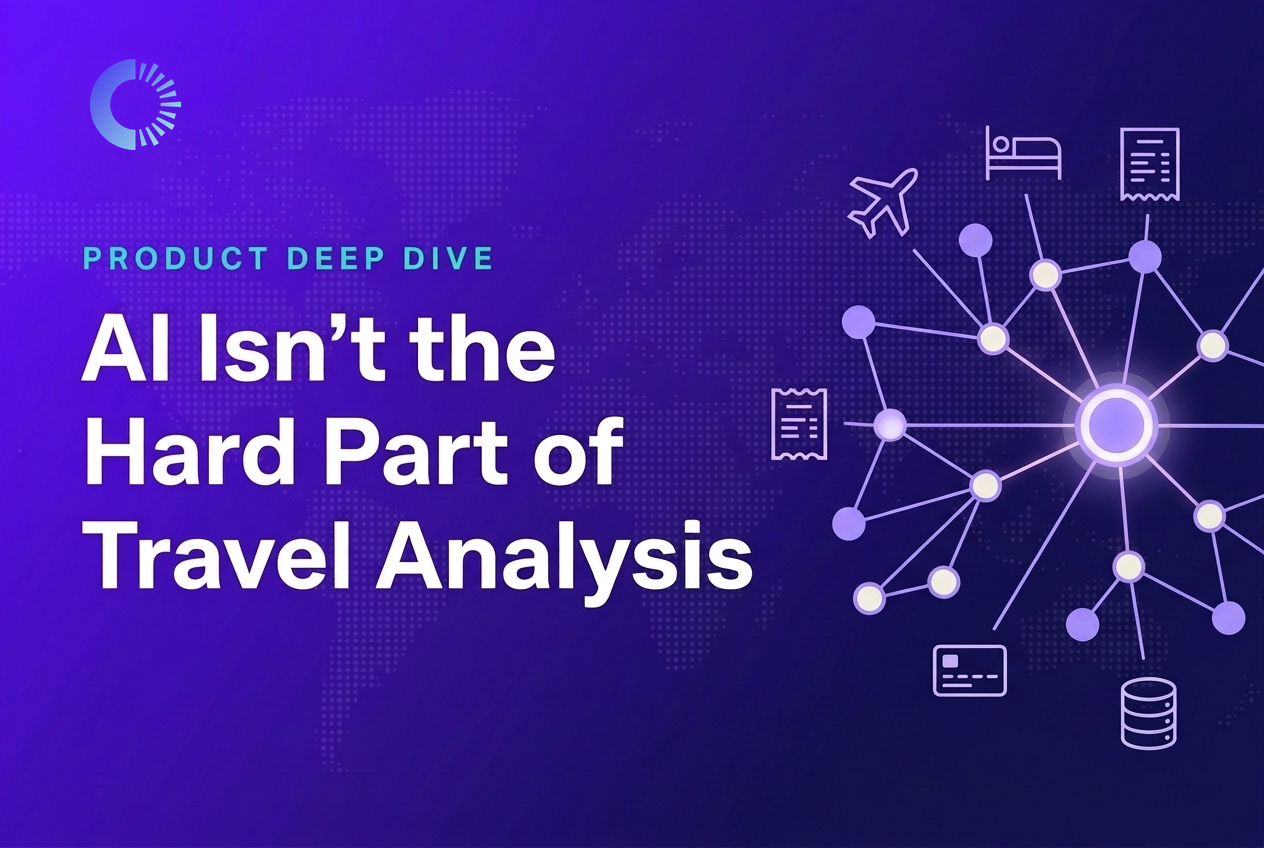
Another of the lessons we've learned working with enterprise travel programs is that semantic understanding is only as valuable as the data beneath it. Travel data rarely lives in a single system. The full picture often requires information from TMCs, expense platforms, HRIS systems, corporate card providers, ERP systems, sustainability datasets, supplier contracts, and more. Each source tells part of the story. None tells the whole story.
Before AI can answer questions reliably, there must first be a trusted source of truth that brings those systems together. Otherwise, the semantic layer becomes an elegant abstraction sitting on top of incomplete information.
This is why I believe the future of analytics won't belong to the companies with the most impressive text-to-SQL demos. It will belong to the companies that solve the much harder problem of creating trust.
Natural language interfaces will continue to improve. Models will continue to become more capable. Generating SQL will become increasingly commoditized. What won't become commoditized is the work required to build shared business definitions, unify fragmented enterprise data, and create a system where every answer can be traced back to a known source and understood by the people responsible for acting on it.
For travel, procurement, and finance leaders, that's ultimately what matters. Not whether AI can produce an answer, but whether the answer is correct.
Because in analytics, confidence isn't created by the model. It's created by the foundation underneath it.